Peace Lily Care Guide
Glossy leaves, white blooms in low light, and the most dramatic thirst signal in the plant world: it faints, you water, it forgives you within the hour.
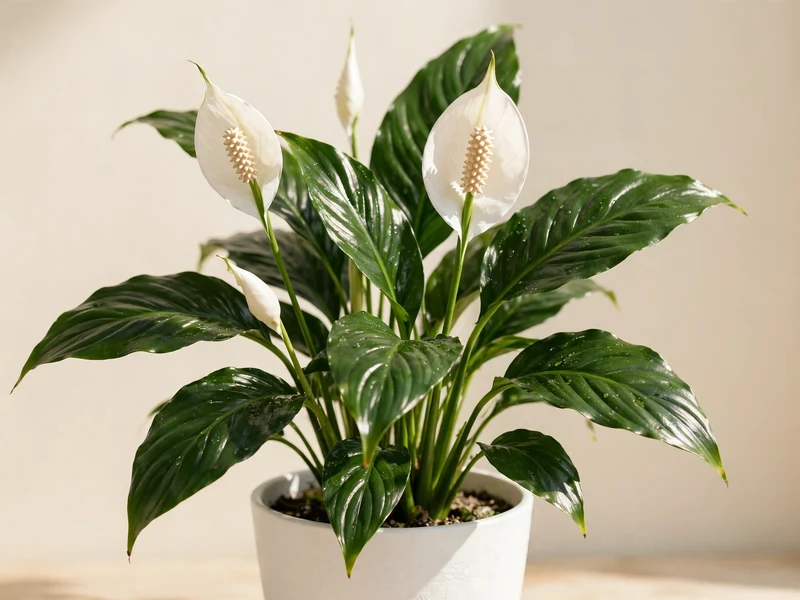
Peace Lily — Care Dashboard
Light
Bright indirect light blooms best, but it flowers and grows in medium and low light too. Too much direct sun yellows the leaves.
Water
Keep the soil lightly moist. When it droops, water deeply and it will stand back up the same day.
Soil and potting
A rich mix that holds gentle moisture: standard potting soil with about a third perlite stirred through so the roots still breathe. Repot each spring or whenever roots start circling the drainage holes, going up one pot size. A peace lily in too large a pot stays wet for too long and sulks, so keep the steps small.
Humidity and temperature
It enjoys the 50 to 70 percent humidity range and will tell you with brown leaf tips when the air runs dry, especially in heated winter rooms. A spot in a bright bathroom suits it beautifully. Keep it between 18 and 27 degrees and away from cold drafts; below about 15 degrees growth stops and leaves can blacken at the edges.
Feeding
A balanced liquid feed at half strength every six weeks through spring and summer keeps the leaves deep green and encourages blooms. More is not better: heavy feeding is a known cause of green tinted flowers and burnt leaf tips. Stop feeding in winter.
Propagation
Division is the way. In spring, tip the plant out, tease the clump apart into sections that each carry leaves and their own roots, and pot each piece in fresh mix. Keep the new plants moist and out of direct light for a few weeks while they settle, and they will grow away as independent plants.
Common problems
| Symptom | Likely cause | Fix | |
|---|---|---|---|
| Brown leaf tips | Dry air and minerals in the water | Trim the brown away, flush the soil with plain water, and raise the humidity a little | Humidity |
| No flowers for months | Not enough light | Move it to the brightest indirect spot you have; blooms follow light | Light |
| Lower leaves yellowing | Soil staying too wet | Let the top few centimetres dry before watering, and never leave it standing in water | Water |
| Blooms opening green | Too much feed, or light recently changed | Skip feeding for a couple of months and keep its light steady; white blooms return | Feeding |
Quick questions
Is a peace lily safe for cats?
No. It contains calcium oxalates and the ASPCA lists it as toxic to cats and dogs. The name is misleading; it is not a true lily, but it still does not belong near pets.
How do I bring it back after a full faint?
Water it deeply and wait. A peace lily that has drooped from thirst usually stands back up within a few hours, with no harm done.
Why does mine flower in spring only?
That is its natural rhythm in most homes: a main flush in spring, then scattered blooms when light and food are right through summer.
Sources: ASPCA Toxic and Non Toxic Plants list; NC State Extension Plant Toolbox; Missouri Botanical Garden Plant Finder · Care facts last verified October 2026.