Snake Plant Care Guide
The closest thing to an unkillable houseplant, provided you resist watering it. Thrives on bright light, tolerates the dim corner, and asks for a drink about twice a month.
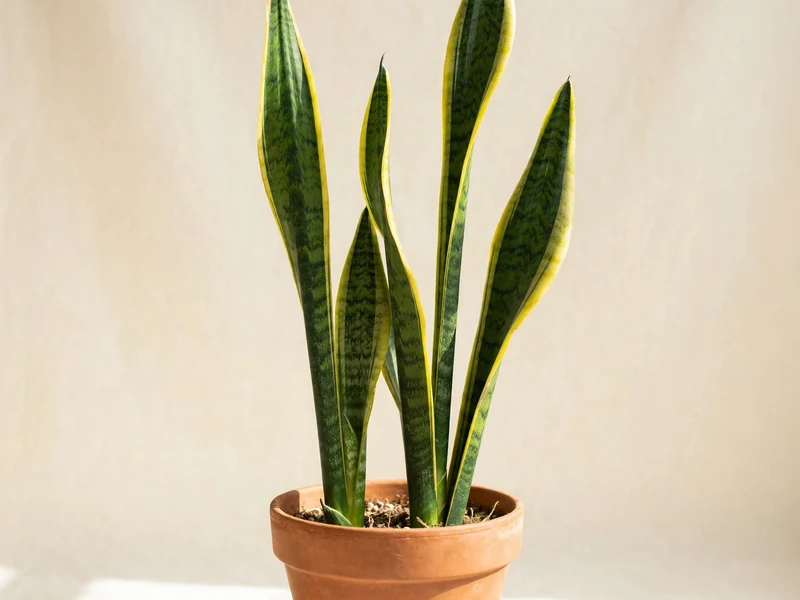
Snake Plant — Care Dashboard
Light
Bright indirect light grows it fastest, but it tolerates low light for months. Introduce it to strong sun gradually so the leaves do not scorch.
Water
The number one killer is kindness. Water only when the soil is dry all the way through, and never let it sit in a saucer of water.
Soil and potting
Grit is everything. Use a cactus and succulent mix, or regular potting soil with roughly half perlite or pumice mixed through, so water runs straight through and the base stays dry. A terracotta pot helps the soil dry between waterings and its weight stops this tall plant toppling. Choose a pot only a little wider than the root ball, always with drainage holes.
Humidity and temperature
Dry air is no problem at all; the 30 to 50 percent humidity of an ordinary room suits it perfectly, which is why it thrives where ferns faint. Keep it between 15 and 29 degrees. Cold is the danger, especially cold combined with wet soil, so move it away from frosty windows in winter.
Feeding
Barely any. A succulent feed at half strength once in spring and once in midsummer is plenty, and many growers skip feeding altogether. Rich feeding produces soft, floppy growth that leans and rots more easily, so restraint is the correct setting here.
Propagation
The reliable route is division: at repotting time, ease the root ball apart and pot up the offsets, the baby rosettes growing from thick underground stems, each with its own roots. Leaf cuttings also work, sections of leaf pressed into gritty soil or stood in water, but plain cuttings lose the yellow edging and grow back solid green. Division keeps the pattern.
Common problems
| Symptom | Likely cause | Fix | |
|---|---|---|---|
| Mushy leaf bases | Overwatering rotting the base | Stop watering, cut away every soft leaf, and repot what is firm into dry gritty mix | Root Rot |
| Wrinkled, slightly soft leaves | Genuinely thirsty after a long dry spell | Water deeply once, let it drain fully, then return to the usual sparse rhythm | Water |
| New leaves pale and floppy | Too little light | Move it gradually into brighter indirect light so the new growth comes in stiff and upright | Light |
| White cottony patches | Mealybugs | Wipe them off with a cotton bud dipped in rubbing alcohol, checking the tight bases of the leaves | Pests |
Quick questions
How often should I actually water a snake plant?
Every two to three weeks in summer and once a month or less in winter for most rooms. When in doubt, wait another week; it stores water in its leaves and copes with drought far better than with wet soil.
Is a snake plant safe for cats?
No. It contains saponins and the ASPCA lists it as toxic to cats and dogs, so keep it where pets cannot chew a leaf.
Why is mine not growing at all?
It rests in winter and in low light. New spears come in the warmer months, faster with bright light. A healthy plant that holds its shape is doing fine even when it seems to pause.
Sources: ASPCA Toxic and Non Toxic Plants list; NC State Extension Plant Toolbox; Missouri Botanical Garden Plant Finder · Care facts last verified October 2026.