Spider Plant Care Guide
Pet safe, fast growing, and generous with free baby plants on long trailing stems. A hanging basket of spider plant is the easiest shelf upgrade there is.
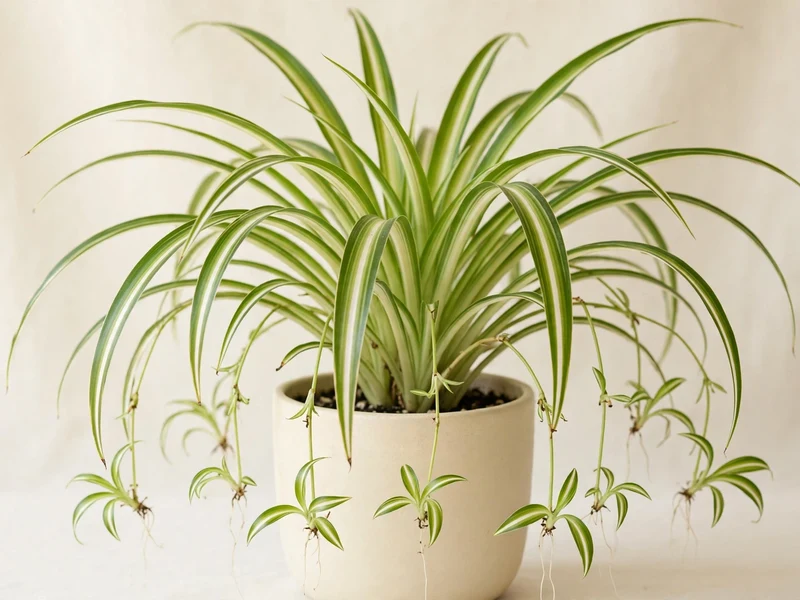
Spider Plant — Care Dashboard
Light
Bright indirect light keeps the stripes crisp. It tolerates medium light with slower growth.
Water
Water when the top half of the soil is dry. Brown tips usually trace back to dry air or minerals in tap water; trim them and carry on.
Soil and potting
Standard potting mix with some perlite through it is all it asks. In a hanging basket, choose a plastic pot rather than heavy ceramic for the sake of the hook. It grows fast and fills a pot within a year or two; repot in spring when the thick roots start heaving the plant upward or poking out of the base, going up one size each time.
Humidity and temperature
Ordinary room humidity in the 40 to 60 percent range keeps it content. The thinner air of heated winter rooms is behind many cases of brown tips, along with mineral build up from tap water; running a potful of plain water through the soil each month washes those salts away. Keep it between 15 and 27 degrees and out of cold drafts.
Feeding
A balanced liquid feed at half strength once a month through spring and summer matches its fast growth. Overfeeding darkens and burns the leaf tips, so if tips are browning and you feed often, cut back before you change anything else. No feed is needed in winter.
Propagation
The babies do the work. A mature plant sends out long arching stems carrying small plantlets. Pin a plantlet onto the surface of a small pot of moist soil while it is still attached to its mother, wait a few weeks for roots to grip, then snip the stem. Every plantlet becomes a full plant, which is why one spider plant quietly becomes six.
Common problems
| Symptom | Likely cause | Fix | |
|---|---|---|---|
| Brown leaf tips | Dry air and minerals building up in the soil | Trim the tips, run plain water through the soil to flush it, and raise humidity if the room is heated | Humidity |
| Stripes fading to plain green | Not enough light | Move it into brighter indirect light and the new leaves will stripe up again | Light |
| Soil drying out within days | Pot completely full of roots | Repot one size up in spring, or split the plant and pot up both halves | Water |
| Tiny insects on the flower stems | Aphids | Rinse them off in the shower or sink, and repeat a few days later if any return | Pests |
Quick questions
Is a spider plant safe for cats?
Yes. The ASPCA lists it as non toxic to cats and dogs. Cats still love to bat the dangling babies, so hang it high if you want it to keep its looks.
Why has mine never made babies?
Plantlets come with maturity and good light, and a plant that is slightly snug in its pot often flowers sooner. Brighten its spot, feed it through summer, and give it time.
How do I root the baby plantlets?
Set the baby, still attached, onto a small pot of soil and pin it down gently. Once it has rooted, cut the joining stem. You can also root babies in water first.
Sources: ASPCA Toxic and Non Toxic Plants list; NC State Extension Plant Toolbox; Missouri Botanical Garden Plant Finder · Care facts last verified October 2026.