ZZ Plant Care Guide
Stores water in thick underground rhizomes, which is why it shrugs off dark corners and forgotten waterings that would finish most plants.
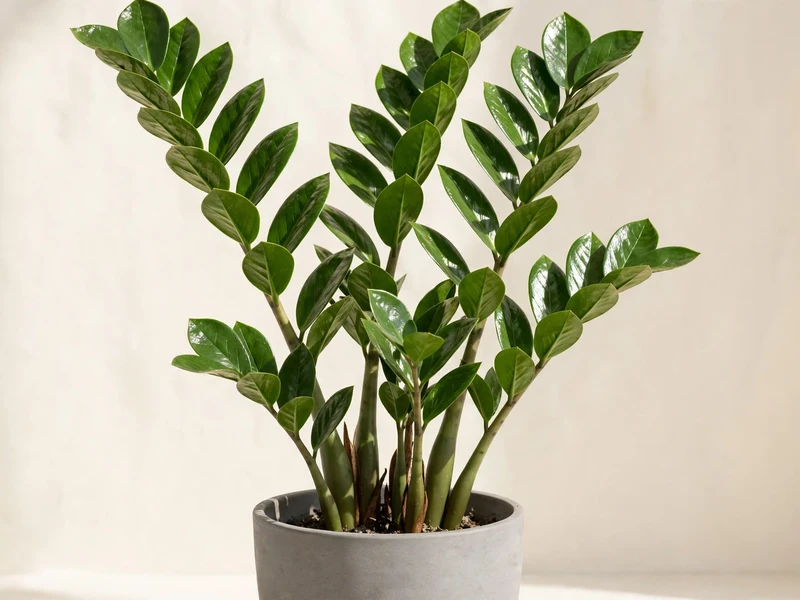
ZZ Plant — Care Dashboard
Light
Anything from low light to bright indirect. Growth is slow in the dark corner and steady near a window.
Water
Once a month is a good rhythm for most homes. If you are not sure whether to water, wait another week.
Soil and potting
Those thick underground rhizomes rot fast in soggy soil, so drainage is the whole game. Use a cactus and succulent mix, or potting soil cut with about half perlite or pumice. The pot must have holes and should feel almost too small; a roomy pot holds water the plant never asked for. Repot every two or three years, or when the rhizomes start pushing the pot out of shape.
Humidity and temperature
Bone dry air bothers it not at all; the 30 to 50 percent humidity of any normal room is home turf. Keep it between 18 and 27 degrees. Cold is its quiet enemy: below about 15 degrees it stalls, and cold soil that is also wet is the fastest route to rot. Keep it off frosty windowsills in deep winter.
Feeding
One of the lightest feeders on this site. A balanced liquid feed at half strength twice a year, once in spring and once in midsummer, covers everything it needs. Skip it entirely rather than feed a plant that has just been repotted or one sitting in low light.
Propagation
Division at repotting time is quickest: ease the root ball out and separate clumps of rhizomes, each carrying at least one stem, then pot them up separately. A single leaflet pressed into gritty soil will also root and slowly form its own rhizome, but slowly means the better part of a year, so treat that route as a patient experiment.
Common problems
| Symptom | Likely cause | Fix | |
|---|---|---|---|
| Mushy stem base | Rhizomes rotting in wet soil | Stop watering, cut away every soft rhizome and stem, and repot what is firm into dry gritty mix | Root Rot |
| Leaves yellowing and dropping | Too much water | Let the soil dry out completely, then water half as often as you have been | Water |
| Tall sparse stems with wide gaps | Reaching for more light | Move it closer to a window and turn the pot weekly so all sides get a share | Light |
| Sticky leaves with cottony spots | Mealybugs | Wipe them off with a cotton bud dipped in rubbing alcohol, and check the stems weekly | Pests |
Quick questions
Is a ZZ plant safe for pets?
No. It contains calcium oxalates and the ASPCA lists it as toxic to cats and dogs. Its upright shape at least makes it easy to place out of reach.
How fast does a ZZ plant grow?
Slowly, and that is normal. Expect a handful of new stems across a growing season in good light, and almost none in a dark corner or in winter.
Why is one stem turning yellow while the rest look fine?
Often it is simply the oldest stem retiring, especially after a wet spell. Cut it out at the base and check the rhizome below it is firm, not soft.
Sources: ASPCA Toxic and Non Toxic Plants list; NC State Extension Plant Toolbox; Missouri Botanical Garden Plant Finder · Care facts last verified October 2026.